Chapter 2: Vedic Society, Epics & The 16 Mahajanapadas
1. The Vedic Corpus & Chronological Stratigraphy
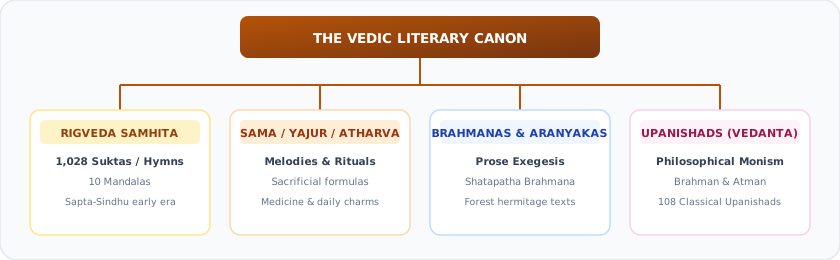
The Vedic era spans from the composition of the earliest hymns of the Rigveda (c. 1500–1000 BCE) in the Sapta-Sindhu (Seven Rivers) region to the Later Vedic Period (c. 1000–600 BCE), which witnessed the eastward migration into the Ganga-Yamuna Doab and the transition from pastoral lineage groupings (Janās) to settled agrarian territorial polities (Janapadas).
2. Socio-Political Evolution: Early vs. Later Vedic
| Institutional Parameter | Early Vedic Period (Rigvedic: 1500–1000 BCE) | Later Vedic Period (1000–600 BCE) |
|---|---|---|
| Socio-Spatial Core | Sapta-Sindhu (Punjab, Indus, Saraswati) | Aryavarta (Ganga-Yamuna Doab, Kuru-Panchala) |
| Economic Base | Pastoralism primary; Gau (cattle) measure of wealth; Gavishti (war for cows) | Settled agriculture; Rice (Vrihi), Barley (Yava), Wheat (Godhuma) |
| Metallurgy | Ayas (Copper/Bronze) | Syama/Krishna Ayas (Iron) & Painted Grey Ware (PGW) |
| Political Assemblies | Sabha (Elders), Samiti (Folk Assembly), Vidhata (Tribal distributor) | Decline of Vidhata & Samiti; Royal autocracy and Rajan becomes Samrat |
| Taxation | Voluntary tribal gifts (Bali) | Mandatory regular agrarian extraction (Bali, Bhaga, Shulka) |
| Social Stratification | Flexible occupational classes; Varna based on craft/lineage | Rigid fourfold hereditary Chaturvarna & Gotra exogamy |
::: insight Iron Technology & The Second Urbanization The proliferation of iron axes and iron-tipped ploughshares (Syama Ayas) around 800–600 BCE enabled the clearing of the dense, sal-forested middle Gangetic valley, unlocking agrarian surplus and triggering the Second Urbanization. :::
3. The 16 Mahajanapadas (c. 6th Century BCE)
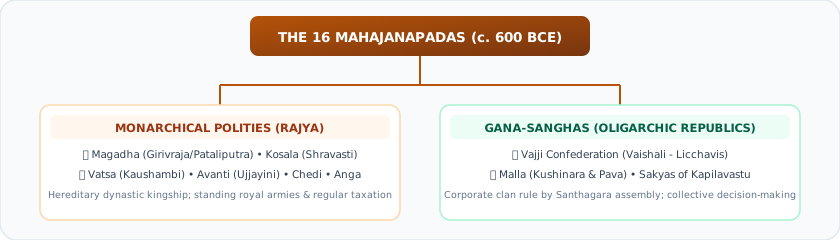
The Buddhist text Anguttara Nikaya and the Jain text Bhagavati Sutra list sixteen major territorial states (Sodasa Mahajanapadas) operating as either monarchies (Rajya) or non-monarchical oligarchies (Gana-Sanghas).
The Geopolitical Triumph of Magadha
Magadha rose to imperial hegemony over all rival kingdoms due to four decisive strategic advantages:
- Strategic Topography: First capital, Rajgir, was surrounded by five natural hills; second capital, Pataliputra, sat at the hydraulic confluence of the Ganga, Son, and Gandak rivers (Jaladurga).
- Iron Ore Monopoly: Direct control of the rich magnetite iron deposits of Rajmahal hills and Singbhum (modern Jharkhand), enabling superior weaponry.
- War Elephants: Unlike western kingdoms reliant on cavalry, Magadha extensively fielded heavy armored war elephants extracted from eastern forests.
- Fertile Alluvial Soil: Heavy monsoon rains and nutrient-rich alluvium yielded enormous agricultural surpluses without requiring artificial fallow periods.
4. The Heterodox Śramaṇa Revolution: Buddhism & Jainism

Check Your Mastery
⚡ Concept Quick-CheckTest Your Conceptual Intuition
Which Buddhist canonical text contains the authoritative listing of the 16 Mahajanapadas of the 6th century BCE?