Chapter 4: Gandhian Era: Non-Cooperation, Civil Disobedience & Quit India
1. Gandhi’s Return & Early Satyagrahas (1917–1918)
Returning from South Africa on January 9, 1915, Mohandas Karamchand Gandhi applied the technique of Satyagraha in three regional laboratory struggles:
- Champaran Satyagraha (1917, Bihar): First Civil Disobedience; against the oppressive European planter Tinkathia system (
indigo cultivation). Commission abolished Tinkathia and refunded 25% of illegal exactions. - Ahmedabad Mill Strike (1918, Gujarat): First Hunger Strike; secured 35% wage increase for textile workers during Plague Bonus dispute.
- Kheda Satyagraha (1918, Gujarat): First Non-Cooperation; demanded revenue remission for patidar peasants following total crop failure (Revenue Code allowed remission if yield was under 25%).
2. Rowlatt Act, Jallianwala Bagh & Khilafat-NCM (1919–1922)
- Rowlatt Act (1919): Anarchical and Revolutionary Crimes Act allowed detention without trial for up to 2 years ("No Dalil, No Vakil, No Appeal").
- Jallianwala Bagh Massacre (April 13, 1919, Amritsar): Brigadier-General Reginald Dyer fired upon an unarmed crowd gathered for Baisakhi, killing hundreds. Rabindranath Tagore renounced his Knighthood.
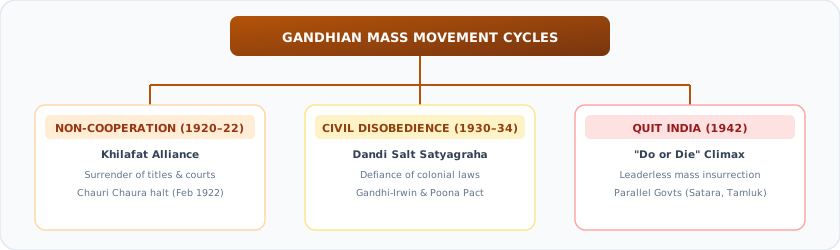
- Non-Cooperation Movement (1920–1922): Combined with the Khilafat Movement (led by the Ali Brothers: Shaukat Ali & Mohammad Ali). Boycott of government schools, law courts, foreign cloth, and titles.
- Chauri Chaura Incident (February 4, 1922): Violent clash in Gorakhpur where a mob torched a police station killing 22 constables. Gandhi unilaterally called off the movement on February 12, 1922 (Bardoli Resolution) citing lack of discipline in non-violence.
3. Civil Disobedience Movement (1930–1934) & Salt Satyagraha
- Lahore Congress (1929): Presided by Jawaharlal Nehru; passed the historic Purna Swaraj (Complete Independence) resolution; hoisted the Tricolor on the banks of River Ravi on midnight of Dec 31, 1929; celebrated First Independence Day on Jan 26, 1930.
- Dandi March (March 12 – April 6, 1930): Gandhi marched 240 miles from Sabarmati Ashram to Dandi with 78 chosen followers, breaking the salt tax monopoly.
- Gandhi-Irwin Pact (March 5, 1931): Suspension of CDM; Congress agreed to attend the Second Round Table Conference.
- Poona Pact (September 24, 1932): Agreement between Mahatma Gandhi and Dr. B.R. Ambedkar (signed in Yerwada Jail) abandoning British Prime Minister Ramsay MacDonald's Communal Award of separate electorates for Depressed Classes in exchange for increased reserved seats (from 71 to 148) within the general electorate.
4. The Quit India Movement (August 1942)
Passed at Gowalia Tank Maidan (August Kranti Maidan, Bombay) on August 8, 1942. Gandhi gave the historic clarion call: "Do or Die" (Karo ya Maro).
- All top leaders arrested overnight under Operation Zero Hour.
- Spontaneous leaderless uprising: underground networks (Aruna Asaf Ali, Jayaprakash Narayan, Usha Mehta's secret Congress Radio).
- Parallel Governments (Jatiya Sarkar / Prati Sarkar): Formed at Tamluk (Midnapore, Bengal), Ballia (Chittu Pandey in UP), and Satara (Nana Patil in Maharashtra).
Check Your Mastery
⚡ Concept Quick-CheckTest Your Conceptual Intuition
The historic Poona Pact of September 1932 between Mahatma Gandhi and Dr. B.R. Ambedkar resulted in: